
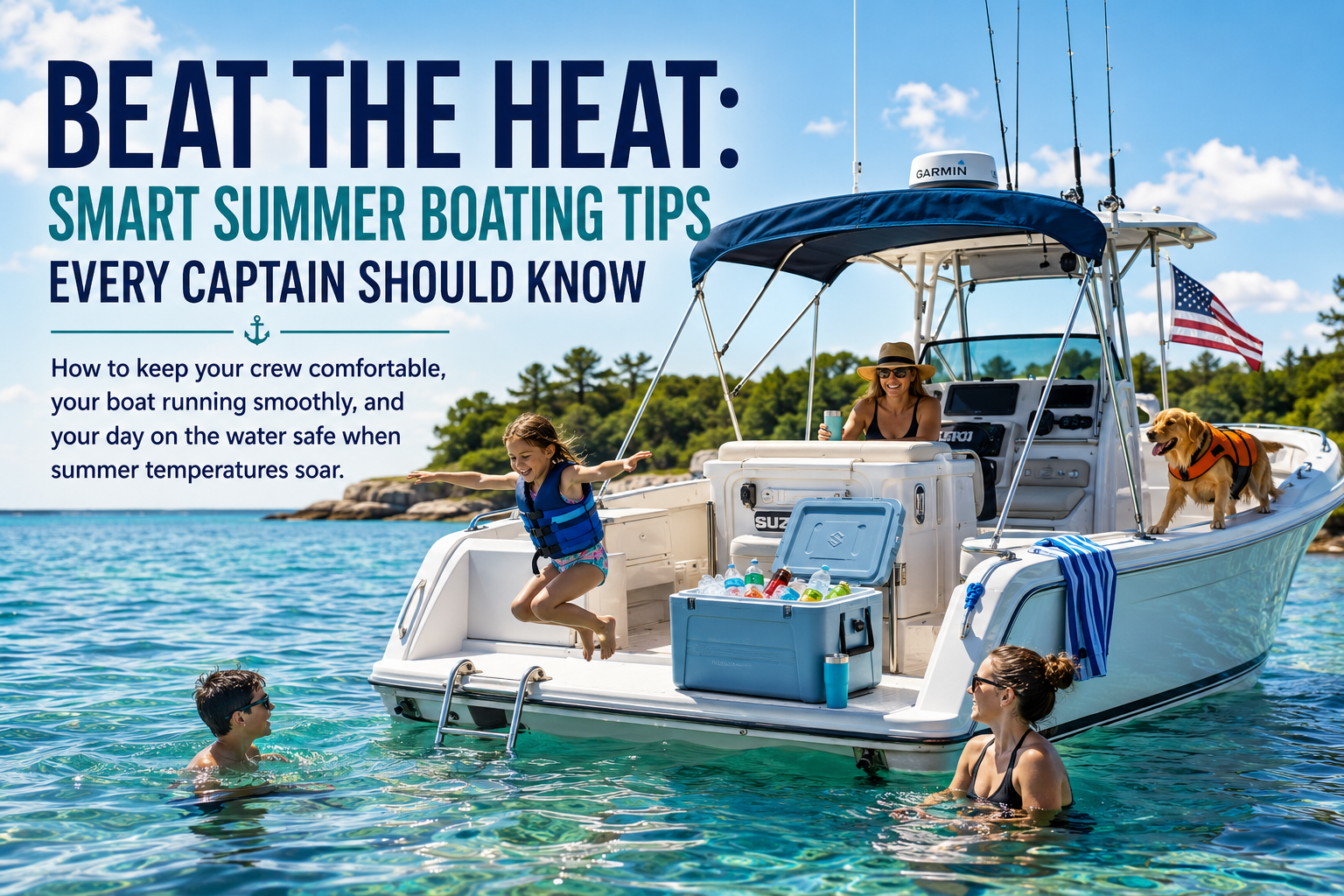
Beat the Heat: Smart Summer Boating Tips Every Captain Should Know
How to Keep Your Crew Comfortable, Your Boat Running Smoothly, and Your Day on the Water Safe When Summer Temperatures Soar
By the middle of July, boating season is in full swing. Marinas are busy, sandbars are crowded, and families are spending every possible weekend on the water. It’s one of the best times of year to own a boat—but it’s also one of the hottest.
High temperatures, intense sunshine, and long days on the water can take a toll on both your crew and your boat. Fortunately, a little planning goes a long way toward making your next outing safe, comfortable, and memorable for all the right reasons.
Whether you’re heading offshore, cruising your favorite harbor, or anchoring in a quiet cove, these simple tips will help you beat the heat and enjoy every minute of summer boating.
Start Earlier, Finish Happier
Ask experienced captains what time they like to leave the dock in July, and many will give you the same answer: early.
Launching before 8:00 a.m. offers several advantages:
- Cooler temperatures
- Calmer water
- Less boat traffic
- Easier docking
- Better fishing conditions
- More available anchorage space
By early afternoon, temperatures can climb into the 90s, afternoon sea breezes begin to build, and popular destinations become crowded.
Sometimes the best part of the day is being back at the dock before everyone else is just getting started.
The Sun Is Stronger Than You Think
Most people underestimate how much sun they’re exposed to while boating.
Unlike spending a day in your backyard, sunlight reflects off the water, increasing your exposure from below as well as above. Even on partly cloudy days, harmful UV rays can quickly lead to painful sunburn.
Before leaving the dock, make sure everyone has:
- Broad-spectrum sunscreen (SPF 30 or higher)
- Polarized sunglasses
- A wide-brimmed hat or cap
- UV-protective clothing
- Lightweight long-sleeve shirts
- Lip balm with SPF
Don’t forget to reapply sunscreen every two hours—and even more often after swimming.
Stay Hydrated Before You Feel Thirsty
One of the biggest mistakes boaters make is waiting until they’re thirsty to drink water.
By that point, dehydration has already begun.
The combination of heat, sun, wind, and physical activity causes your body to lose fluids much faster than you realize.
A few simple habits can make a big difference:
- Bring more water than you think you’ll need.
- Keep reusable bottles within easy reach.
- Alternate sports drinks with water if you’re sweating heavily.
- Limit alcohol, especially during the hottest part of the day.
- Encourage children to drink regularly, even if they say they’re not thirsty.
Hydration isn’t just about comfort—it helps prevent fatigue, headaches, dizziness, and poor decision-making.
Your Boat Feels the Heat Too
People aren’t the only ones affected by summer temperatures.
Boats work harder in hot weather, and a few extra minutes of inspection before leaving the dock can help prevent problems later.
Pay close attention to:
- Engine temperature gauges
- Cooling water discharge (“tell-tale”)
- Battery condition
- Belt tension
- Bilge ventilation
- Fuel system connections
Inside the cockpit, electronics and multifunction displays can also become extremely hot when exposed to direct sunlight.
Whenever possible, provide shade for electronics while anchored and allow them to cool naturally if they become excessively warm.
Keep Kids Comfortable
Children often become overheated long before they recognize what’s happening.
They’ll continue swimming, fishing, and playing until they’re suddenly exhausted.
Plan frequent breaks throughout the day.
Good ideas include:
- Swim stops every hour or two
- Plenty of fresh fruit
- Frozen treats
- Cooling towels
- Time in the shade
- Lightweight clothing
Watch for warning signs such as flushed faces, unusual fatigue, irritability, or complaints of headaches.
Don’t Forget Your Four-Legged Crew Members
Dogs love boating—but they can overheat quickly.
Unlike people, dogs cool themselves primarily through panting, making hot, humid days especially difficult.
Help keep them comfortable by providing:
- Plenty of fresh drinking water
- Shade throughout the day
- A non-slip place to rest
- Frequent swim breaks (where safe)
- A properly fitted canine life jacket
One thing many owners overlook is the temperature of the deck itself. Fiberglass can become surprisingly hot in direct sunlight, potentially burning sensitive paw pads.
If the deck feels too hot for your bare feet, it’s probably too hot for your dog as well.
Keep Your Food Safe
Nothing ends a boating trip faster than food poisoning.
Coolers spend hours sitting in direct sunlight, and every time they’re opened, cold air escapes.
To keep food fresh longer:
- Pack the cooler the night before.
- Use block ice whenever possible.
- Separate drinks from food to reduce opening the main cooler.
- Keep raw meat and seafood sealed.
- Store the cooler in the shade whenever possible.
A little organization helps your ice last longer and your lunch stay safe.
Afternoon Thunderstorms Can Build Quickly
Summer weather can change in a matter of minutes.
One moment you’re enjoying calm water and blue skies. The next, dark clouds are building on the western horizon.
Before leaving the dock:
- Check the marine forecast.
- Watch weather radar throughout the day.
- Pay attention to wind shifts.
- Listen for distant thunder.
Remember:
If you can hear thunder, you’re close enough to be struck by lightning.
Don’t wait for rain to begin before heading toward safe harbor.
Choose Your Anchorage Carefully
By mid-summer, many favorite anchorages become crowded.
Take a few extra minutes to find a location that offers:
- Natural shade when possible
- Good holding ground
- Adequate swing room
- Protection from afternoon winds
- Safe swimming conditions
A little extra distance from the crowd often leads to a much more relaxing afternoon.
Know the Signs of Heat Exhaustion
Heat-related illness can affect anyone on board.
Common warning signs include:
- Heavy sweating
- Dizziness
- Headache
- Muscle cramps
- Nausea
- Weakness
- Confusion
If someone begins showing these symptoms:
- Move them into the shade immediately.
- Encourage them to drink cool water.
- Apply cool, wet towels.
- Reduce physical activity.
If symptoms worsen or don’t improve quickly, seek medical assistance without delay.
Sometimes the Smartest Decision Is Heading Home
One of the best qualities of an experienced captain is knowing when to call it a day.
If your crew is tired, the weather is changing, or temperatures have become uncomfortable, don’t feel obligated to stay out longer.
The goal isn’t to squeeze every possible minute out of the day.
The goal is for everyone to return to the dock smiling—and eager to do it all again next weekend.
Final Thoughts
Summer is what boating is all about. Long days, warm water, family adventures, fishing trips, and evenings spent watching the sunset from the cockpit create memories that last a lifetime.
A little preparation before leaving the dock can make those memories even better.
Pack plenty of water, protect yourself from the sun, keep an eye on the weather, and remember that the best captains aren’t the ones who take the biggest risks—they’re the ones who make smart decisions that keep everyone safe.
Here’s to calm seas, sunny skies, and a summer filled with unforgettable days on the water.
The Boaters Newsletter Team